
Every year around this time, things start to feel a little different.
It’s not dramatic. It’s not overnight. But you have already noticed it.
There’s more daylight when you leave work. The air isn’t as sharp. The ground starts to soften. You catch yourself thinking about opening windows, cleaning things out, maybe even getting outside a bit more.
That change —that’s the Spring Equinox … or for others – it’s Ostara, it’s simply the time of year when light and dark are about equal. From here on out, the days get longer and we move fully into spring.
I don’t necessarily follow any specific belief system around it, but I do try to stay in tune with the seasons and what’s naturally happening. There’s something practical about it. Life shifts, and we shift with it—whether we think about it or not.
What the Spring Equinox Actually Is
The Spring Equinox is a real, physical event—not just a seasonal idea.
Let’s take it back to grade school Science class…..It happens sometime between March 19–22 in the Northern Hemisphere, depending on the year. The Earth is tilted on its axis and because of that tilt, different parts of the Earth receive different amounts of sunlight throughout the year—that’s what gives us our seasons.
During most of winter, the Northern Hemisphere is tilted away from the sun. That’s why the days are shorter and the light feels weaker. As the Earth continues to orbit the sun, there are two points in the year where that tilt isn’t leaning toward or away from the sun.
The Spring Equinox is one of those points.
At that moment:
- The sun is directly over the equator
- Day and night are nearly equal in length
- Both hemispheres receive about the same amount of sunlight
After this, the Northern Hemisphere begins tilting toward the sun again.
That’s when:
- Days get longer
- Sunlight gets stronger
- The ground warms
- Plants begin to grow
- Animals start becoming active again
It’s basically the turning point where everything starts waking up. Don’t you just love that… everything waking up?!?!
About Ostara
Ostara is the name often used for the Spring Equinox in pagan and seasonal traditions, particularly those rooted in older European cultures. It’s tied to the same natural event—but viewed through a seasonal and symbolic lens.
Ostara is associated with:
- The return of light
- The warming of the earth
- The beginning of the growing season
There’s some debate around where the name comes from. Many believe it’s connected to a Germanic goddess named Eostre (or Ostara), associated with dawn, fertility, and the arrival of spring. Others think she may have been more localized, and not widely worshipped.
Either way, the ideas tied to Ostara go back much further than the name itself. Long before modern calendars, people paid attention to this time of year because it mattered for survival. The ground became workable again. Seeds could be planted. Animals began reproducing. Food systems started back up.
So whether you call it the Spring Equinox or Ostara, it marks the same thing:
The start of the growing season.
Themes of the Season
There are a few ideas that consistently show up around this time of year.
Balance
This is one of the only times in the year where light and dark are equal. It’s a natural reset point.
Renewal
After months of winter, things begin to start again.
Growth
Not fully there yet—but moving in that direction.
Action
Winter is more inward. Spring starts to pull you back into doing.
You see it outside, but you feel it too.
Symbols You’ll See This Time of Year
A lot of the common symbols tied to spring actually come from this same seasonal shift.
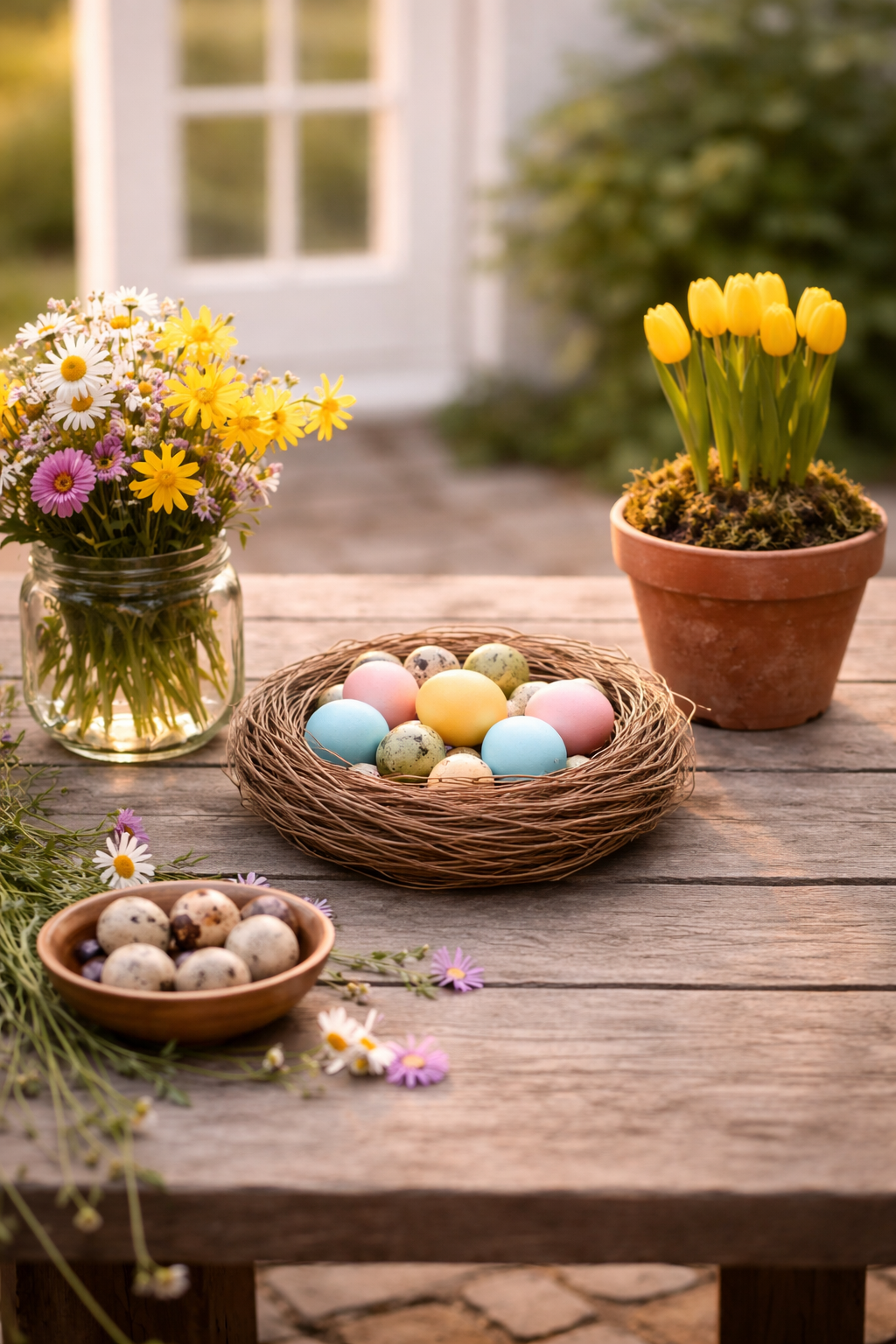
- Eggs → new life, potential
- Rabbits / hares → fertility, fast growth
- Flowers → the first visible signs of change
- Birds → return of activity and sound
Even the colors—soft greens, yellows, pastels—come straight from what’s happening in nature.
If you grew up decorating eggs or seeing rabbits tied to spring, you’ve already seen pieces of this—just in a different context.
What I Do This Time of Year
Nothing complicated. Just things that make sense for the season.
Open the house up
Even if it’s still a little cold. Fresh air does more than you think.
Start clearing things out
Everyone talks about “spring cleaning” like it’s one big event. For me, I clean with the seasons. Each seasonal shift is a reset point. Spring just happens to be the one where everything feels more obvious after winter.
Get back outside
Checking on plants, starting seeds, or just being outside more in general.
This is when the garden starts. I have my trays started down in the basement with their heating pads and grow lights… I love seeing the green poking up from the dirt!!
Shift how I cook
Meals get a little lighter. Less heavy, comfort food. More fresh ingredients.
You naturally start reaching for different things.
Simple Ways to Mark the Season…(some may say seasonal “rituals”…. you can call them that or not)
This time of year comes with a set of built-in rhythms.
Starting seeds.
Planning the garden.
Cleaning out the house.
Opening windows.
Cooking differently.
Go outside for a walk
You can call them routines, habits, or rituals—it’s all the same idea.
They line up with what’s happening outside.
Things are starting again, and you adjust with it.
The Spring Equinox isn’t about forcing a fresh start.
It’s about recognizing that things are already starting to move again.
The light is coming back. The ground is waking up. The season is shifting.
You just meet it there.
Thanks for being here.
Pull up a chair and stay awhile.
— Angie
Leave a Reply